Saturday, May 22, 2010

Art from the Heart !

Dear Readers,


My latest article in The Telegraph newspaper reaching over a million readers, for your reading pleasure. Now get instant updates every time a new blog post is written by either becoming a follower of this blog or putting in your email address on the top right hand side of this blog.


I love watching children drawing what they see around them. The doodles and pencil lines come from the heart and have a lot of passion in every stroke.


The opposite is often true in the Contemporary Art space nowadays. The joy of drawing and painting seem to have almost vanished. So the artist comes up with a concept and then using a computer — and perhaps Photoshop — produces an image which is then painted and churned out. What you get is art that looks nice but is without heart and soul. Some of the top Indian contemporary artists have fallen into this trap and this is a fact that often worries me.


So the moment an artist starts to sell for over Rs 3 lakh or so, you hear that he or she has hired a couple of studio assistants to help prepare the base of the canvas. In scores of cases these assistants actually paint the computer-generated image. This style of working, I believe, is one of the reasons for similar looking work being churned out all the time. Also, don’t forget that studio assistants come cheap in this country. Many of them finish from art colleges and then survive living someone else’s dream.


Let me turn to an interesting show I went to recently by an artist who paints from her heart. Ranjeeta Kant, who trained under the eminent artist Rameshwar Broota, has painted for years for the love of art and not for money. Her latest exhibition at Delhi’s Gallerie Alternatives called The Dance of the Rainbow was inspired by a trip to Bali.


The Kachak Dancers and The Abode (above) by Ranjeeta Kant


She was deeply affected by the lush green tropical island — everything from the green paddy fields and the exquisite lotus ponds and lovely flowers to the deep blue ocean and the tranquil images of Buddha everywhere. The myriad hues of nature and this entire experience have been captured in rich greens, magical blues and the striking hints of red that together result in stunning canvas works.


One is immediately drawn to the works as it’s clear that Ranjeeta has worked on the canvas and the resulting art is a work of passion. In spite of the detailed canvas work, the prices are reasonable and most of the works are under Rs 2 lakh for a 3ft by 4ft canvas. Smaller works sell for close to a lakh. It was one of those shows where you’d feel inspired to instantly reach for your chequebook.


Another show which impressed me recently was On the Darkest Night I Can See the Light at Delhi’s Gallery Seven Art run by Aparajita Jain. This was the first of six exhibitions being planned by Aparajita under the collective name First Showings. Helping her to put this clutch of exhibitions together is curator Deeksha Nath. Together, they’ll attempt to spot talent fresh out from the art colleges.


On display at the first show were three Chennai-based artists, Kumaresan Selvaraj, Aneesh Kalode Rajan and Sarvanan Parasuraman. Selvaraj works with surfaces and textures. So you had works with a number of layers on every surface — some were plain but stunning and you could feel the textures.


What we see conceals a lot behind it by Kumaresan Selvaraj


Rajan had interesting works called Perspectives. In these he imagines what he, his cousins and Michelangelo see in a group of clouds and how these images are dependent on their present preoccupations.


I was also impressed by Parasuraman who uses a variety of mediums like vinyl stickers, ball bearings, sand, silicon and fibreglass. He had done a rope sculpture using sand and silica and from a distance it looked exactly like a rope. Also, he had done a work made by ball bearings forming a pattern.


The good thing about the show was the freshness of the ideas behind all the works which was very stimulating. Also, there was the crucial fact that the costliest work was for Rs 95,000 and most works were in the Rs 40,000 to Rs 60,000 range.


It was art that I enjoyed!


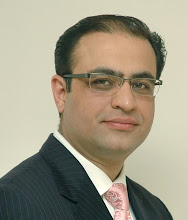
Kapil Chopra is Senior Vice President of Oberoi Hotels & Resorts. He writes for the "The Telegraph" newspaper and specifically for the Sunday magazine "Graphiti" which has a readership of over a million readers. In Delhi, he writes a column on the art market in "The Mail Today" newspaper and also has written for the "First City" magazine.

Sunday, April 25, 2010

The Berlin Canvas !

Dear Readers,

Here is my latest article published in The Telegraph newspaper in the Sunday edition reaching over 1 million readers......

Europe has been really cold this winter with a lot of freak storms and a chilly winter. In Berlin, though the art scene has been hot and vibrant. Due to the lovely confluence of cultures, Berlin attracts the best artists and with rental spaces still reasonable as compared to the rest of Europe, it has some of the most stunning gallery spaces.


Both Bodhi and Nature Morte, India’s top contemporary art galleries were present in Berlin at one time (Nature Morte is still around here) and there are also galleries like Christian Hosp which have been showing a lot of Indian and Pakistan contemporary art. Then came the recession and running a gallery with declining sales became a losing proposition and Bodhi had to shut shop.


I was fortunate that there was an important show at the architecturally inspirational “Haus Der Kulturen Der Welt”, the house of world cultures. The building looks like a flying saucer and is brilliantly conceptualised. The curators called the show “Why all the rage?”.


We had three important curators — Valerie Smith, Sussane Stemmler and Cordula Hamschmidt. They explored instances of rage and how it plays a role in people’s life — how rage gets manifested in communities and the effect that it has on people’s minds and bodies. The idea of rage as transformative energy is a key concept to the development of “On Rage” a vehicle from the negative to the positive, from status quo to revolution, from hopelessness to control.


Two artists who really stood out for me in the entire show were Shoja Ajari, an Iranian artist who now lives in New York. He was the co-winner of a Silver Lion award at Venice Film festival and he does photographs and video installations. Final Judgment, his work, was a video projection on canvas and projects the moral tales of Shiite Islam concerning the judgment day. Then inside this intricate work there was recent news footage of Muslim global political activity. It was stunning to see a canvas with flitting moving images — a very strong representation.


Shoja Azari‘s Final Judgement


Seher Shah was at her best with large scale drawings from her solo show “Paper to Monument 2”. These drawings dwelled on the complexities of urban excavation through public memory. Her three works were in the centre of the display and the black-and-white contrast of her drawings again reinforced my belief that she is one of the most important young artists of our times.


Paper to Monument II by Seher Shah


I also went to Probir Gupta’s show at Nature Morte Berlin. Probir’s work touches upon issues of war, religion, development, globalisation and genocide. He uses shrapnel in his work that he sources from abandoned military waste. Using this debris as his “clay,” he models mutant and macabre bodies and landscapes. The resulting paintings, fascinatingly complex with unexpected shots of colour, are chaotic to look at. Technically, he employs a thick, almost violent, use of impasto and brush strokes.


Assembled Identities by Probir Gupta


I liked the works which are not new but are the works that did not sell in the Philips de Pury auction house exhibition in January 2009. The works were beautiful but you could see that the pricing could have been better and hence even when I went, only one had sold. Large canvas works were priced at Rs 25 lakh. Now with the top names in Indian contemporary art down by 80 per cent from the peaks, Probir has still not understood the reality on pricing.


Artists need to understand that just because they sold a few works some years back at the height of the Indian contemporary art boom that does not become a pricing platform for years to come. I would have ideally liked the works to be priced drastically lower.


But in the art world, egos are bigger than usual and logic dies a slow death. That also shrinks the small collector base as people don’t like being taken for a ride. It’s high time that artists understood that collectors will not buy without logic and the fact that only one work has virtually sold in the last 15-18 months is a testimony to the new and informed collector !


Well, the journey was not complete in the art city of the world without staying in the art’otel at Berlin City Centre West. What attracted me to the hotel was the collection of Andy Warhol works they had. I enjoyed staying a in a hotel surrounded by the pop art works of Warhol and the rooms in bright orange, purple and green. Let us see when we get our first art hotel in the country!


Kapil Chopra is Senior Vice President of Oberoi Hotels & Resorts.He writes a blog on collecting and investing in Indian Contemporary Art at www.indianartinvest.blogspot.com.He also writes for The Telegraph Newspaper in the Sunday magazine " Graphiti" every fortnight. In Delhi, he writes for "The Mail Today " Newspaper and the "First City" Magazine.

Painting with Passion !

Dear Readers,

Here is the electronic version of the latest article published in the Sunday magazine of The Telegraph Newspaper reaching over a million readers !


I meet a lot of people who look askance at the new wave of Contemporary Art and would rather have pretty paintings which resonate in their living spaces. My take on this has been that art is not about only paintings but the entire gamut of expression from sculpture, installations and photograph to video art. This week I want to focus on an artist who is more in the original genre of painting and creates stunning pieces with a background and experience that actually makes you calmer when you view his work.


It’s interesting to meet Sidharth, who was born in a Sikh family and later in life, moved away from the worldly pleasures of life to join a monastery and become a monk. In the monastery he was named Sidharth — the name he still bears today. But after some time in the monastery he left and using all his accumulated learning started painting.


Sidharth is an artist with a difference in the Contemporary Art landscape of artists in the country. I have always been amazed by his connect with nature and the meticulous research that goes into every work. In the era of computer- generated art and studio assistants, Sidharth stands out as he does not even use commercially available colours. The other thing that he uses a lot is thin gold foil. That gold work is clearly visible on the canvas. In each of the canvases he usually narrates a story using the images.


The skills that he learnt at the Namgyal Monastery help him derive his colours and shades from Mother Nature. He uses natural pigments, vegetable dyes and his intrinsic knowledge of the topography to make his own colours in various hues. Always, very curious to learn and imbibe more, I have in my association of many years with him seen him use and implement the best techniques from Chinese, Japanese and now Russian schools of art.


He also makes his own handmade paper and thanks to his use of natural colours, you find a rarely seen luminosity in his works. The other thing which is very noticeable in his works is that most of the background colours are very bright, which is a result of the natural pigments and dyes that he uses. Crucially, the people shown in his work have faces without a predominant nose. That’s because Sidharth believes that the nose represents ego in our world. He tries to paint people when they are devoid of ego or rather to depict them in a utopian world where there is no ego!


Laughing Cow


His link with Mother Nature was an influence at his latest solo show at Religare Art Gallery in New Delhi. The connect is clearly visible in his series of paintings on the “Cow” — worshipped as a mother figure in India. He focuses on the worshipped Kamadhenu to the cow in the industrialised urban environment today, eating all the garbage and then producing milk which has pollutants causing disease.


Kartar Pur


The Poster Cow


His canvases tell a complete story that focuses on the worshipped Kamadhenu and a satirical comparison to a woman who is running her house with all products derived from milk. The ritual dismembering of the sacrifice is evoked in the dehumanisation of the perception of the cow reduced to its parts as against the various deities residing in Kamadhenu. He calls this work Laughing Cow, and it is his satirical take on the evolution and journey of a cow from ancient times to the urbanised modern world.


Sidharth is an expensive artist and although he did sell at Sotheby’s once, he generally doesn’t feature on auction circuits and the recession actually did not hit him much. He has a stream of steady collectors and fans — actress Dimple Kapadia being one of his biggest admirers.


The smaller canvas works are around Rs 2.4 lakh and larger sizes which are 4ft by 5ft can fetch up to Rs 10 lakh to Rs 12 lakh, although there are smaller works starting from Rs 70,000.The prices are steep. But the originality of his paintings and the sheer radiance emanating from what are clearly works of love painted with passion makes him an artist well worth considering for one’s collection.


Kapil Chopra is Senior Vice President of Oberoi Hotels & Resorts.He writes a blog on collecting and investing in Indian Contemporary Art at www.indianartinvest.blogspot.com.He also writes for The Telegraph Newspaper in the Sunday magazine " Graphiti" every fortnight. In Delhi, he writes for "The Mail Today " Newspaper and the "First City" Magazine.

To subscribe for instant updates,log onto www.indianartinvest.blogspot.com and enter your email address on the right hand top corner.

Saturday, March 27, 2010

The Art Market - Games People Play !

Here is my latest article published in "Mail Today" newspaper in New Delhi for your reading pleasure. The Article was published on 26th March.


I see a lot of contemporary art shows opening every week, but there’s one that caught my eye recently, that too at a new space — Rasika Kajaria’s Exhibit 320 at Lado Sarai. What struck me was the cutting- edge work on display, especially that of Kundo Yumnam and Sandip Pisalkar, who made a scooter with a gas pipe that is also good for killing mosquitoes! Pisalkar first tried it out in a slum before putting it up at the show — well, the artists are getting bolder by the day.

On the art market, meanwhile, first sale of the spring season by Saffronart was being watched closely for pointers to the shape of things to come. The sale went by smoothly.

In the contemporary art space, there were no surprises and it was pretty much on predictable lines, except a work by Subodh Gupta that went for Rs 1.7 crore — it was a happy departure from the rates commanded by the artist in last year’s recession- hit market. Auctions in 2009 had seen his work go for Rs 80 lakh to Rs 1.1 crore.

A lot of galleries, collectors and investors ( including art funds) treat auction results as gospel truths and that is why data gets manipulated. The Indian contemporary art market does not have depth and is susceptible to manipulations. Already, Osian’s Art Fund has not been able to pay its investors. And I keep hearing complaints from people who are stuck with wrong valuations by the Copal Art Fund.

Let me give you some real- life examples of how easy it is to manipulate prices if an investor is keen on making a quick buck.

There is a prominent artist from Orissa who has also been shown in the country by the best Indian art galleries. When he started out around five years back, a group of art investors with a manipulative mindset picked him up at a standard rate of Rs 5,000 per square foot and bound him to a contract that required him to give all his work to his paymasters.

The investors then slowly started raising the prices in auctions.

The quality of the work was good and the investors had ample stock. The work was put up in an auction house, the bidding was taken to unrealistic heights by the investors’ friends, who bought a canvas each at every auction, and then these were sold through other auction houses at inflated prices. Their cost of buying their own possessions back was the 15 per cent buyer premium charged by the auction house and their entire stock got re- valued at a level that was seven times higher than the original.

Now this artist, because he was really good, got solo shows at prominent galleries and this further swelled the profits of the first batch of investors. The people who suffered were the later investors who followed auction prices and bought at ridiculous values, and collectors who genuinely liked the artist’s work and paid a price which he does not deserve till date. I saw his works even at the Saffronart auction and some people bought them at stretched valuations. That is how the art market works.

THIS happens all the time. I call some of these artists, auction artists — that is, they owe some part of their growth to friendly auction houses, which sometimes shut their faculties conveniently and sometimes also have a stake in the growing valuations of an artist. So the next time you read that screaming headline, ‘Indian art sets a new high’, don’t buy the hype: scratch the surface and probe deeper. Also, to get closer to the real value of the work of an artist, subtract the 15- 25 per cent buyer premium from the final value shown, for that is added on the final bid after the auction is closed.

Don’t get swayed by the valuation game. Check the background of an artist, be diligent about the research and probe the pricing logic. Also, whenever you intend to buy a canvas for over Rs 2 lakh, just buy from the best and well respected art galleries. In the particular case I have used as an illustration, you’d have still got taken for a ride, but in most cases you’d be protected, for even galleries have learnt from the past.

Auction houses Sotheby’s and Christie’s would have completed their sales by the time this article goes into print and although they have wonderful lots from the modern space, I wasn’t impressed with the contemporary works. All this price manipulation should not stop you from collecting, but don’t get taken for a ride! Buy what you like and only at the right price !


Kapil Chopra is Senior Vice President of Oberoi Hotels & Resorts.He writes a blog on collecting and investing in Indian Contemporary Art at www.indianartinvest.blogspot.com.He also writes for The Telegraph newspaper in the Sunday magazine " Graphiti" every fortnight. In Delhi, he writes for "The Mail Today " newspaper and "First City" magazine.

Sunday, March 7, 2010

Eye-catchers with Mithu Sen & Latitude 28 !

Dear Friends,

Here is the latest article in The Telegraph newspaper Sunday magazine " Graphiti" reaching close to a million readers, for your reading pleasure. If you wish to receive instant updates the moment the blog is updated, please enter your email address on the upper right hand side of the blog, no questions, just your email address for the latest views on Indian Contemporary Art !


The art season is roaring back to life with everyone keen to show after a year of being in the economic doldrums and the calendar for art lovers is growing more hectic. Two shows that have opened in Mumbai and New Delhi grabbed my eye for being distinctive and unique.

Mithu Sen, arguably, one of India’s most talented artists, is having a solo show at Gallery Chemould in Mumbai. She has always been more active in key exhibits internationally including the last one in Vienna but now gallery-goers have a chance to see her at home. I have always regretted the fact that the Indian public have missed out on what Mithu has to offer as her best shows and works are always out of India but now that’s about to change.

In fact, Mithu has presented her most dramatic show ever — called ‘Black Candy’ — which opened a few days ago. The unique thing about the show is that most of the works have three dimensions to them. There’s the drawing which has text on it. That’s accompanied by sound which lends an exceptionally different feel to viewing the art. Also one thing to note about Mithu’s art — it is straight from the heart and controversial.

In this series she is trying to understand the vulnerability that men have and she peers into the desires, pain, sorrow and agony they go through. So the works are sexually very explicit and she engages the viewer in a dialogue with the work. She doesn’t impose any views on you — you relate to the work according to your own responses. Her style is one that I’ve never seen before — the art is powerful and will always stir reaction as it’s created with a lot of passion.

Wrestler by Mithu Sen

Now on also is a show entitled ‘Size matters or.....Does it?’ staged by Bhavna Kakar at her newly opened gallery Latitude 28 ( Latitude 28 is the latitude Delhi is located on!). Kakar is a well-known personality in the art world as the Editor of Art & Deal and has also launched her new Art magazine called Take on Art. As she trained to be an artist, she has a keen curatorial eye and her show is quite interesting. She has had every participating artist work in a large work format and a small work format. This tests the execution skills of the artist and appeals to collector as it allows much more choices.

Now in discussing the theme ‘Size’, we’ve all been taught that bigger is usually better. But for those of us who are on the fence about whether one should work on a small-scale or take that giant leap forward towards a bigger canvas and digging deeper into one’s pocket, here’s some thoughts about whether size matters.

In the speculation-led art market, everything boils down to commerce. Sadly art today has a tendency to be valued not by its quality or subject matter but in square inches and square feet! Kakar seeks to dispel with that notion in her own way with creative works in both formats. So she has a 5-ft x 4-ft canvas by Manjunath Kamath and also a set of twelve 4.5-in x 3.5-in works called True Lies. It’s quite refreshing to see large and small works by all artists in the show. I was also impressed by the visual appeal of a 17-ft work depicting Qawali singers by G.R. Iranna.

Manjunath Kamath’s Lie in Between Question & Answer; (above) Ointment by Baiju Parthan

Baiju Parthan has two works called Ointment in both formats and I was impressed with both works that are about the ideas people have about the world and the lengths to which we go to protect, defend, and propagate them. The very fact there are many views explaining the universe differently suggest that these are all products of engagement. The visual representation of both the works is just stunning.

So here are my picks so if you’re in Delhi or in Mumbai, you have some interesting art shows to visit and engage with both visually and intellectually!


Kapil Chopra is Senior Vice President of Oberoi Hotels & Resorts.He writes a blog on collecting and investing in Indian Contemporary Art at www.indianartinvest.blogspot.com.He also writes for The Telegraph newspaper in the Sunday magazine " Graphiti" every fortnight. In Delhi, he writes for "The Mail Today " newspaper and "First City" magazine. Comments and views are welcome at indianartreview@gmail.com.

Saturday, February 20, 2010

Atul Dodiya's Master Stroke !

Dear Friends,


Here is my article in Mail Today on Atul Dodiya's upcoming art show opening at Vadehra Art Gallery in New Delhi and the price correction that has happened. I saw the images and the works looked quite nice but really 3 works on the basis of images stood out, now sources indicate that the show is sold out. I don't know the identity of the buyers or the motive, I just thought that Atul and Vadehra Art gallery did a smart thing by keeping the price right. I think in a contemporary art market which is an an infancy stage it was quite a welcome decision. Here is the article published on the 19th of February for your reading pleasure.


It is the season of art openings and the curtain is set to go up on many exciting shows this month. If you still haven’t had the time, do check out Resemble Re-Assemble at Devi Art Foundation to view some cutting-edge contemporary art from Pakistan. But that’s not what I am going to dwell upon here. One of the most important openings for the first quarter of 2010 is Atul Dodiya’s Vadehra Art Gallery show on March 5. I’m picking up this show as it offers amazing insights into the Indian contemporary art space. Dodiya, I believe, and so do others in the know, is India’s foremost contemporary artist who also commands the respect of his community.

I’ve seen admiration for him cut across galleries/ collectors. In the boom that drove values to illogically high levels in the Indian art market, the average price of Atul’s works had reached close to a crore. I don’t know who was responsible for it — whether it was his gallery Bodhi, which was representing him at that time, or his own brainwave — but the market was suddenly flooded with scores of his paper works in editions of 12 to 20. Their commercial values were in the range of Rs 6-8 lakh and they were being billed as unique prints because he had done some work on each of them. Then he had a show at Bodhi in Mumbai with 40 watercolours. The sales were brisk and the demand was high. Everyone was happy but the number of works in a speculative art market defied logic, and worse, the quality of this show called Pale Ancestors, was average for his talent.


Even before the market started turning, Dodiya’s values started coming down as there was too much supply and the values were too high — mediocre 30-by-22-inch watercolours were being offered for Rs 20 lakh! As the demand started going down, suddenly there were no takers for his work at those price points. He was not seen at any important show as far as I can remember. The values crashed and Dodiya’s works priced at Rs 20 lakh went for Rs 6 lakh, that too if they found a buyer at the auctions. There was no demand for any of his other works in the secondary market. So, I was happy to receive images of the upcoming Atul Dodiya show passed on by a fellow collector. Note that the images were being circulated a good 45 days before the show is scheduled to open. The works are significant and most of them are 5ft-by-8ft, quite lush in technique and content. What’s commendable is the artist’s maturity and the Vadehra Art Gallery’s offering of these works at Rs 30-36 lakh. WHO better to introduce a price correction and leave money on the table for the collectors than one of the country’s respected contemporary artists.


This is one the best pricing decisions in a market full of greed and speculation. The credit for taking a bold decision to mark down values for really significant works must be given both to Dodiya and his gallery. Sources say he is already sold out — a month before its opening day — because it offers both quality and value. In the last few months, I’ve seen numerous shows open where canvases have been illogically priced, and to anyone who disputed the logic, the standard answer was that you need to appreciate the aesthetics and not focus only on prices. We saw mid-tier contemporary artists out of tune with reality and had top galleries justifying values in 2009 as being the same as in 2007, which was illogical because in 2007, the Indian economy was on an overdrive. On a different note, the Saffronart auction catalogue for March is now online, and you can make out that the contemporary art market is recovering fast, with a much better variety available for buying this time. My pick of the lot in the contemporary space is the stunning T.V. Santhosh canvas. The whole of 2009 did not see any of his recent works being consigned and this is estimated at Rs 30-40 lakh.


I like the fact that the estimates for most of the works are in line and Saffronart has done a good job in keeping them low. I can sense a recovery for the contemporary art market but would advise you all to be careful. Remember the rule: Buy only what you like and if you have decided that you need to own a particular work, do not get carried away. And do your research on the pricing.


Cheers


Kapil Chopra is Senior Vice President of Oberoi Hotels & Resorts.He writes a blog on collecting and investing in Indian Contemporary Art at www.indianartinvest.blogspot.com.He also writes for The Telegraph newspaper in the Sunday magazine " Graphiti" every fortnight. In Delhi, he writes for "The Mail Today " newspaper and "First City" magazine.

Tuesday, February 9, 2010

The Pakistan Palette !

This is my article on The Pakistan Contemporary Art Show at Devi Art Foundation which appeared in the Sunday magazine "Graphiti" of The Telegraph Newspaper which has a print run of 0.5 million copies. Comments are welcome!

The art scene is back at its vibrant best! Week after week there are new shows and one of the season’s best has been assembled by Anupam Poddar at the Devi Art Foundation.

Poddar’s passion as a collector is well known but his initiative in mounting a show of his collection of Pakistan Contemporary Art gives viewers a chance to see new art from our neighbour that’s innovative and absorbing. I was also impressed with his choice of curator, Rashid Rana, one of Pakistan’s foremost contemporary artists best known for his Red Carpet & Veil series — tiny images of an abattoir forming a red carpet and pornographic images in the shape of a veil.

The exhibition of 45 artists, culled from the vast collection of Anupam and Lekha Poddar, is aptly titled Resemble Reassemble. It showcases Experimental Art rather than the miniature intricate work we associate with Pakistani art. The art which spans the past decade is fresh and for a country which has issues with travel visas and limited interactions with other countries due to security issues, strongly contemporary. It’s art with which you instantly connect and the satire, in fact, is sometimes too much in your face. It’s also refreshingly without the hype and speculation of Indian Contemporary Art.

And the icing on the cake — for me — is the show’s staging at the Devi Art Foundation in Gurgaon, a stunning museum with lots of open spaces and excellent ceiling heights where you revel in the experience of soaking in the works. I was quite impressed with the earlier works of Ayaz Jokhio, one of the participants in the recently concluded Asia Pacific Triennale in Brisbane which also had Subodh Gupta and Thukral & Tagra from India. The show featured his works from 2005 and if I look at his works today, they’ve changed quite a lot, but even in 2005 you can feel the intensity of his style.

So here are my top three picks. Imran Ahmed Khan in this installation Implode 1 has various parts of an AK 47 rifle suspended with surgical medical instruments all hanging from the ceiling in a spectacular visual display. According to him, weapons and surgical instruments are related. Both penetrate human flesh, one to kill, the other to cure, both are handled by human figures and in most cases draw blood. This was a haunting image and executed beautifully.

Implode 1 by Imran Ahmed Khan

In the second work, Amber Hammad gets herself into the photograph titled Maryam, the Arabic name for Mary. It recreates the Mother Mary & Child genre that has inspired many paintings and sculptures around the world. She recreates this image in front of traditional Islamic architecture and the photograph has a box of diapers and a book on erotic art next to it. I admired the way the artist conveyed the various dimensions of a woman’s life in an Islamic environment. It’s a subtle yet defining work with a touch of humour in it.

Amber Hammad’s Maryam

And of course, no commentary on Pakistan Contemporary Art can still be complete without some miniature work in it. Nusra Latif Qureshi has lived in Australia for many years and in this work, titled Rainbird, For What Place Are You Crying?, maybe the lovers pointing to some distant location in the work is her own longing for her country –— a yearning shared by all Diaspora artists. Her work, an excellent fusion of miniature art with an exploration of personal, social and political histories, is stunning. Take note specially of her deft use of striking colours and the subtle intricacies inspired by the traditional miniature work.

Rainbird, For What Place Are You Crying? by Nusra Latif Qureshi

I have also been collecting Pakistan Contemporary Art for the last two years and have been impressed with the quality of the work. The values are also quite reasonable especially for the quality of work available. It’s not difficult to get a nice work from a younger contemporary artist for around Rs 50,000 and even experienced contemporary artists are all available in the Rs 2 lakh to Rs 4 lakh range. Some of the galleries showing such cutting edge Pakistan Contemporary Art are Green Cardamom in London and Grey Noise in Lahore.

So if you are looking for art which is a commentary on the times in which we live, start looking at Pakistan Contemporary Art seriously. There’s some great art across the border just waiting to be collected! And if you are ever in the vicinity also do take a trip down to Gurgaon as the show stays open till May 10.

Kapil Chopra is Senior Vice President of Oberoi Hotels & Resorts.He writes a blog on collecting and investing in Indian Contemporary Art at www.indianartinvest.blogspot.com.He also writes for The Telegraph newspaper in the Sunday magazine " Graphiti" every fortnight. In Delhi, he writes for "The Mail Today " newspaper and "First City" magazine.

Sunday, January 24, 2010

Rules of Buying Art after a Difficult Year !

This is my new monthly column in "Mail Today" newspaper on the Art Market. Mail Today from the India Today group is one of the leading newspapers in New Delhi and the National Capital Region.
Enjoy !
The year 2009 started on a difficult note for Indian Contemporary Art but it looks poised for a recovery in 2010, though it is still early days. Last year saw the prices commanded by most Indian contemporary masters sink to all- time lows with some values dropping by more than 75 per cent from their peak.

The Art Tactic Confidence Index sank to a low of 19 in March, but it had recovered to 46 in November 2009 — in plain terms it means that 46 per cent of the collectors would buy contemporary art now, compared with 19 per cent in March. The improvement, as you can see, is relative and there are hardly any buyers for works over Rs 10 lakh.

In the two years before 2009, values had become unsustainable and some of that trend continues till this day. Most of the shows opening in Delhi in the last two months had disappointing sales; only 20 per cent of the works got sold — so much for the ‘ recovery’! All that you hear today is good news, such as a Manjit Bawa selling at Rs 1.6 crore, which is close to a new record, but not that most of the top contemporary artists were struggling at the auctions. So please discount the statements emanating from the galleries that the market is booming and collectors are buying.

What does one do in 2010? Well, you must know that the values are still high and gallery prices are what they used to be at the time of the boom — maybe 10 per cent lower. If you buy at these prices, you’ll end up with a hole in your pocket. So here are some of the rules for you to follow — buy what you really like and would love to hang on the wall; go for the younger contemporary artists with reputed addresses such as Nature Morte, Gallery Chemould, Sakshi Art Gallery, Guild Art Gallery, Project 88 and Latitude 28. The prices should ideally be lower than Rs 2 lakh, but even then, research the artists before collecting their work. Consult other collectors if you believe your favourite artist has potential to grow in the future.

In the top- end contemporary space, it may be prudent for you to wait and watch. In the year gone by, I have bought T. V. Santhosh because he was able to hold his prices even at the peak of recession. The other is Seher Shah, who is still up and coming, but the values are good. All the others are younger artists with prominent galleries — like Sajjad Ahmed, Prajjwal Choudhary, Shreyas Karle and Siddartha Kararwal, whose work is priced between Rs 50,000 and Rs 2 lakh. At the upper end of the spectrum, the only artist I would buy at reasonable valuations is N. S. Harsha, who’s not prolific but is very talented.

Game Theory by T.V. Santosh

The year 2009 also saw over 600 investors in the Osian’s art fund struggling to get their capital back. My response is that people who invest in a fund that promises to give higher than bank returns are courting a risk.

If people lose money because they weren’t diligent enough, or because they became passive investors after reading art world headlines, then it was bound to happen. The Indian art market does not have a big enough base of collectors to support an art fund, so wait for the market to really grow before you lose your money in such ventures. Art bought for financial returns can be risky because of the lack of pricing transparency and also due to the fact that it isn’t liquid like other assets.

I would rather enjoy the process of buying art, hang some great canvases on the wall, make sure I apply the principles of intelligent buying to protect my capital and spend time reading on how to buy art and not invest in art funds. Spend time on the World Wide Web, visit shows at the best galleries in the cities, read blogs, and you are on your way to becoming a well- informed art collector!

Kapil Chopra is Senior Vice President of Oberoi Hotels & Resorts.He writes a blog on collecting and investing in Indian Contemporary Art at www.indianartinvest.blogspot.com.He also writes for The Telegraph newspaper in the Sunday magazine " Graphiti" every fortnight. In Delhi, he writes for "The Mail Today " newspaper and "First City" magazine.

Monday, January 11, 2010

The Crash and After !

Dear Friends,

This is the article published in "Graphiti" the Sunday magazine of The Telegraph newspaper on the 3rd of January giving my views on the year gone by and the road ahead !

It’s been a turbulent year for all asset classes including art but it’s thankfully drawing to a close on a better note than it started. However, it’s left behind some hefty damage — especially at the speculative end. What are the relevant lessons of the past year for Indian Contemporary Art — how can one build a portfolio that holds its value during rough weather?

We should note right away that the market for the modern artists — especially Gaitonde, Souza, Husain, Raza and a real gem whom we lost this year, Tyeb Mehta — remains strong but even among those art titans there are some pretty steep price variations. What this difficult year highlighted was the importance of quality and not just names. So if you’re lucky enough to possess a Souza work from the late ’50s to the early ’60s, the price for a 2ft by 3ft canvas now could be Rs 75 lakh, but if you have a Souza work from the late ’80s, within the same size range, the price could be just Rs 20 lakh.

Landscape with Houses and Lake by F.N. Souza

In the contemporary space, the speculative side of the market has taken the biggest hit. There had been a lot of froth in the market and that has been pretty roundly removed. All the key stakeholders — galleries, artists and collectors — were caught up in the tide of ever rising values and when the bad times struck, prices crashed by as much as 75 per cent.

A lot of artists, even those who had been bracketed in the top tier, suddenly found they weren’t selling at all when confidence troughed in March. One of the most flamboyant art galleries in the last four years, Bodhi Art Gallery, which had presences in Delhi, Mumbai, Singapore, New York and Berlin, finally closed down all its locations this year under the weight of mounting costs as their roster of artists slumped from the lofty valuations they’d enjoyed just a year earlier.

Atul Dodiya’s Sleeping with the Stars

I feel the fall of Bodhi Art Gallery, which some rivals had regarded as too commercial, has not been a good thing for the world of Indian contemporary art. Bodhi was a leader in redefining some of the norms on presenting and displaying art, publishing arguably the best catalogues with each show and also taking Indian contemporary art to an international collector base.

It also had some of the best sites, welcoming and well-informed gallery staff and a really conducive environment for viewing art. But the scale and magnitude of the operation built on a group of artists who’d started to believe the hype was too much and finally led to the demise of what was, at one point of time, India’s most powerful contemporary art gallery. It was built on a model of investment and financial returns and though art is a financial asset anyone who looks at it merely through a commercial prism is bound to fail.

And there is a lesson in the recently concluded Christies’ Hong Kong sale of contemporary art. Its price estimates were completely out of whack with market realities. So it was not surprising to see that most of the works did not even manage a decent bid.

So what ultimately is the takeaway for collectors and galleries from these cautionary tales? In the good times, don’t get carried away by hype. It’s important to note that what keeps its value is quality — but only at the right price. Still even in these difficult times, a 1979 work by Jogen Choudhary was able to smash all records in the Sotheby’s auction to breach the Rs 2 crore mark due its incomparable quality.

All in the Landscape by Probir Gupta

Now, though, the situation is looking rosier for the art world. Art Tactic, an art research firm which tracks confidence in Indian contemporary art, has seen its confidence index recover to 46 from 19. This means that 46 per cent of the collector community surveyed will buy contemporary art at current valuations — perhaps not as good a figure as one would like but still a lot better than the 19 per cent registered earlier when times were tougher. Another pointer to improving sentiment is the recently concluded Saffron Art auction in which 62 per cent of its art works sold above the higher estimate — underscoring that the market is recovering its poise.

Looking ahead to the first quarter of 2010, one of the most interesting events is a show by cutting edge British collector Charles Saatchi at his Saatchi Art Gallery in London. The show, aptly titled “The Empire Strikes Back,” will put India — and Pakistan — in the global contemporary art spotlight once again, something which had happened with Arco Madrid last February where India was the focus country. But the timing of Saatchi’s exhibition is better in the context of the recovery in global markets than the Madrid show.

Saatchi’s show, which opens on 29 January, promises to be really eye-catching. The roughly 26 artists featured include a mix of the top names in the Indian and Pakistan contemporary art space and also some new names you may not even have heard of. Some of the younger artists showing are Sakshi Gupta, T. Venkanna, Kriti Arora, Rajesh Ram and Rajan Krishnan among others. You may also want to take a peek at some of the research Saatchi has put up for this show, which you can view at www.saatchi-gallery.co.uk.

Here at home keep an eye out locally for well-known photographer Rashid Rana’s show, curating at the Devi Art Foundation in Gurgaon starting January 16. This exhibit, focusing on the journey of Pakistani contemporary art, should be quite interesting, considering the passion of Anupam Poddar and the pioneering work he has done in the world of collecting Pakistani art.

Now in the meantime, let me wish you all a Happy New Year and a good time collecting in 2010.


Kapil Chopra is Senior Vice President of Oberoi Hotels & Resorts.He writes a blog on collecting and investing in Indian Contemporary Art at www.indianartinvest.blogspot.com.He also writes for The Telegraph newspaper in the Sunday magazine " Graphiti" every fortnight. In Delhi, he writes for "The Mail Today " newspaper and "First City" magazine.

Sunday, December 20, 2009

Confessions of a Collector !

Let me start with a true story on the importance of collectors in the Indian contemporary space. I was invited by my very good friend Swapan Seth, who is maybe the most prolific collector of contemporary art in this country today to view a panel discussion that he was part of. This discussion was on Video Art at Gallery Espace, a gallery I think has done a wonderful job with a lot of art initiatives including the one on promoting video art and even the recent exhibition. Swapan was part of a panel and the discussion started at 6 PM in the evening, there were some of the poster boys & girls of Indian Contemporary Art curators and critics on the panel with him.

I got up at 7.30 PM finally because I realised that most of the people on the panel just loved their own voice and was bored to death ( except 1 speaker who was really good). Swapan finally got a chance 15 minutes later after hearing others for a good 1 hour 45 minutes !, now this is a collector who is keeping Video art alive and one of the most appreciative collectors for young artists. I asked some people who stayed back and they loved the last part only !

This is a clear example of how the art world needs to change with the focus on collectors.Galleries and curators who will not adapt will just stand on the wayside as people move on. I will tell you what I love about Peter Nagy, Arvind Vijaymohan and Bhavna Kakar in New Delhi, they are interesting people with a view, they all are involved in the sales process but are not boring or full of themselves.

Let me also share a view that I hear about buying and selling of artworks. Meet any top artist represented by a top art gallery in India, now they only sell to serious collectors and please do not put the works in auction, my retort is why not ?

Answer :Well, because old collectors loved their art and never sold the works, they were genuine lovers of art.

Question : Really, how much did they pay for the works at that time ? 1 Lac for a Hussain ? ! Talk about paying 25 lacs for the work of a top contemporary artist and you will get the answer.

If a collector is taking financial risk because he loves your work, then he has the right to buy and sell, when Charles Saatchi says that, very few people have a problem but otherwise I hear this all the time. Now, I am not talking about flipping a work, I am against that or even being in the art world to just flip will get you nowhere but look at the costs of collecting today. What is the harm in consigning works to an auction to raise further funds so you can collect more ?

These are uncomfortable questions, ethics are sometimes meant for collectors only, in 2 specific cases this year and I am talking about galleries which are in the top 5 galleries in this country, the prices were revised downwards by 40 % in 24 hours of the show opening ! So much so for the love and appreciation of art.

So what did I buy this year ? Only what I absolutely loved ! ( Rule No.1 ) and also at the right value ( Rule No.2 ).
  • A Lovely 10 ft by 6 ft Seher Shah shown at Armory Show in New York and then being shown at the current solo in Nature Morte

  • A triptych by Prajwal Choudhary, the image is posted in the earlier posts on this blog at http://www.indianartinvest.blogspot.com/ from Bhavna Kakar & Aparajita Jain's lovely show at the peak of the recession, great work at a fantastic value

  • A Sajjad Ahmed photography work from the same show, the value that he asked was ridiculous to say the least, till the gallery got him to understand some basics of pricing!
  • An absolute beauty of an installation by a young artist called Sidhartha Karawal called "My Generation is Silent" again featured on this blog from Project 88

  • Sarnath Banerjee's satirical graphic works, a set of 4 works on property dealers, really fantastic from Project 88

  • TV Santhosh's "Game Theory", absolutely brilliant work on canvas ( I think his canvas works are to die for !) from Guild Art Gallery
  • Shreyas Karle, a collection of 15 paperworks which I am yet to recieve ! from Guild Art Gallery

What did I sell ?

  • Arunkumar H G, the Nandi bull, lovely work but had to sell it to raise money.

Which Artists will I sell or not buy this year ?

I think I will avoid all middle rung contemporary artists this year, so if you have the money, please go ahead and buy

  • Thukral & Tagra
  • TV Santhosh ( Only Canvas)
  • Jitish Kallat ( Only Canvas)
  • N S Harsha
  • Mithu Sen ( Large substantial works only)
  • Seher Shah ( Large works only)
  • Jagannath Panda ( Large works, price needs to be right)

I think both Bharti Kher & Subodh Gupta are in a different league due to their association with Hauser & Wirth but collectors have lost money and hence considering my limited funds and risk aversion, I would stay away for now. Although, I would buy a great Subodh installation any day but considering the prices would need to be really lucky on the value front.

Now, for everyone else who is over the 2 lacs mark just research more and below the 2 lac mark, if you love the work just buy it. Simple rules for collecting art. Over 2 lacs, needs to be justified, I loved Aditya Pande & George Martin at 2-4 lacs and would have happily sold them at 8-10 lacs without batting an eyelid. The Value perspective needs to kick in especially in the environment today, otherwise you are being taken for a ride. Now collectors I know were buying them at 10 lacs, which according to was just pure speculation because there was no way that they could command such prices logically. Would I buy both of them at more reasonable valuations, absolutely yes!

So what about all the wonderful artists over 2 lacs, well just watch if they are going anywhere, if you love the work , then please keep it otherwise just consign to an auction, no harm with that. I have 3 artists I have mentioned on this blog earlier who have now moved to my sell list for this year as I believe they are doing nothing exciting and have reached a value threshold. So I need to sell to sustain my collecting frenzy!

I would rather buy a Sajjad Ahmed, Prajwal Choudhary & Sidhartha Karwal for under 2 lacs or less and enjoy my art, as all of them have the potential to make it big.

As for the 20 artists, who are sitting at 8-10 lacs price levels, ask them for the justification on their pricing and do your research, most of them would be in my avoid category.

Some very good art shows opened in Delhi in November & December, but most of them have been commercial disasters with illogical pricing and negligible sales. Pretty much like the Christie's auction which failed miserably as the estimates were too high, Saffronart scored with the right pricing and had better results with in line estimates.

Thank you for your support, encouragement and affection for making this the most widely read and searched blog on Indian contemporary art ( I am not saying this, Google is saying this !, over 1.2 lac search results for this blog!)

I will just try to be as frank and honest as I can be........

Merry Christmas and have a great New Year ! Happy Collecting !

Cheers

Kapil


Kapil Chopra is Senior Vice President of Oberoi Hotels & Resorts.He writes a blog on collecting and investing in Indian Contemporary Art at www.indianartinvest.blogspot.com.He also writes for The Telegraph newspaper in the Sunday magazine " Graphiti" every fortnight. In Delhi, he has written for "The Mail Today " newspaper and "First City" magazine.

Wednesday, December 16, 2009

Terror on Canvas

The recent article on T V Santhosh that I wrote in "Graphiti", the Sunday magazine of The Telegraph newspaper reaching over a million readers...........
This week I’ve chosen to zoom in and look at one artist in the Contemporary art space — T.V. Santhosh. He’s interesting for a number of reasons but I’d have to say one of the key ones is that he’s one of the few artists to have focused on the ever-challenging relationship between India and Pakistan.


Santhosh, who has shown at many of the important global art fairs like Art Basel in Switzerland and Armory in New York among others, started focusing on imagery and the aftermath of terrorism much before any other artist in this country began using it as a visual language. He’s really been way out in front on this difficult subject.


Santhosh, who picked up his Bachelor’s degree in fine art from Santiniketan and followed it up with a Master’s in sculpture — again from Baroda’s Faculty of Fine Arts, has also got an extremely distinctive style. He paints in vibrant hues — electric green, neon yellow and shocking orange. In fact, his bold use of colour and technique is so individual that once you see one of his works, you’ll instantly recognise them in any other show.


(From top) A watercolour by the artist; An untitled work by Santhosh; Game theory by Santhosh


The danger sometimes with artists focusing on such volatile topics like terrorism is that too much negativity can creep in. Also viewers can really get tired of looking at such imagery. But these precisely are areas where this Mumbai-based artist who’s from Kerala originally is able to score. There’s no tedium. His work looks visually arresting on the wall, helped by the subtlety of expression in his works so each one stands out. His images depict chaos and paranoia relating to media coverage of contemporary events and his exploration demonstrates a reality on the verge of explosion.


Another interesting aspect about Santhosh — and it’s something I profoundly wish other top Contemporary artists would emulate — is that he’s not overly prolific. So in a year, you can expect him to produce a maximum of eight to 10 canvas works. And because he’s not churning out innumerable works, this establishes room for more demand for his works by both a good Indian collector base and the international collector fraternity.


His sculptures and installations are also quite haunting and unique but I’d have to say in terms of international recognition, they don’t even come close to his fluorescent canvas works with their deeply saturated colours and fluid edges.


On the market front, his prices have displayed an enviable sticking power — a resilience which is quite unusual in the light of the downturn in most art values. In fact, Santhosh is the only Contemporary artist whose work in the period from September 2008 to now has not gone below his primary value — in his case Rs 25 lakh for a 6ft X 4ft work.


The lowest price one of his canvases recorded in the recession was around Rs 27 lakh in the Saffronart auction last December. After that no recent canvas works have featured in any auction. This clearly demonstrated that collectors were not willing to consign any good quality works to auctions and were happy holding the work. What got offered in most of the sales were his earlier works that did not compare to the visual language he’s been using in the last three years. But what’s remarkable is that even these older works sold well above their primary prices (the gallery price).


For collectors, the good thing that his gallery, Guild Art Gallery, has done is to keep his primary prices quite attractive — for a change the primary prices are much lower than auction values.


His latest solo show in New York opened on October 14 at the well known Jack Shainman Gallery and initial reports suggested that four out of the five canvas works were already sold a week before the exhibition opened for public viewing. The primary prices were revised upward to Rs 40 lakh, which is steep but in his case, demand for his works have always outstripped supply even in recessionary times. These financial details are important because these values are high and it’s important that due diligence is exercised even if you might fall in love with one of his works.


Now, coming to a question that I have been asked quite often: how about his watercolour works that are available for a fairly affordable Rs 3 lakh to Rs 4 lakh? Well, I was never a fan of his watercolour works but I must admit that the quality of his watercolour works has gone up tremendously in the last year or so. Generally my answer would be a rule that’s critical to buying art: “Buy what you like and buy the best, look for works which are significant” and those without a doubt are his unforgettable canvas works. But as this could be a bit of a stretch, I would be tempted to collect one of his watercolour works like the one shown here (in picture) just for the brilliance of expression.


Kapil Chopra is Senior Vice President of Oberoi Hotels & Resorts.He writes a blog on collecting and investing in Indian Contemporary Art at www.indianartinvest.blogspot.com.He also writes for The Telegraph newspaper in the Sunday magazine " Graphiti" every fortnight. In Delhi, he has written for "The Mail Today " newspaper and "First City" magazine.

Friday, November 27, 2009

Photo Finish - Article Published in The Telegraph

The latest article published in The Telegraph newspaper Sunday magazine " Graphiti" on contemporary photography for all readers of this blog. Be glued onto the upcoming Saffronart auction for market trends on the 9th and 10th of December and before that Christie's Asian Art sale on the 30th of November........
A leading Indian photographer was once asked why people should pay high prices for photographic works considering that anyone could click a pretty picture. His matter-of-fact retort was: “Everyone can paint so why pay for a good painting.”

But the thought behind the question illustrates one reason why photography is not top-of-mind even for veteran collectors.

Internationally you have photographers like Richard Prince whose photographs can cost between Rs 2.5 crore and Rs 3 crore. Closer home there’s Rashid Rana with his iconic Veil series which is a collection of hundreds of pornographic images that form a veil. Also, his Red Carpet series is a collection again of hundreds of images of an abattoir that make a red carpet. Some of his works can sometimes cost almost Rs 2 crore a piece.

An untitled work by Richard Prince

Still, with a few exceptions, most people are still uncomfortable about collecting photography. Perhaps it’s time to change our pre-conceived ideas and open our minds to the wonderful world of top-class photography.

It’s important to divide the world of photography into two distinct parts. There is, on one hand, documentary photography which captures images of scenic landscapes, city life, everyday life and situations. Then, there’s message-based photography in which a photograph conveys a message or is a satire on our times, thinking or attitudes.

Artist Shilpa Gupta is perhaps the best example in the message-based category. She had people carrying bags wrapped in white canvas with the words “There is no explosive here” printed on them. She then photographed these people in different situations like at a metro station or getting out of a car in London. This was a clear satire on how everyone after the London metro blasts carrying a bag was treated with suspicion.

No one has captured the Indian scenario — whether it’s the Taj Mahal or just a beautiful landscape — better than the acclaimed photographer Raghu Rai. One of his medium-sized prints could cost you close to Rs 3 lakh, but the effect is magical. Then, there’s Dayanita Singh, who captures the moment and brings us the beauty of everyday life and also the magical Prabuddha Dasgupta. If you wish to see any of these works, just do a search in Google Images.

Raghu Rai's Dust

Ajay Rajgarhia runs a contemporary photography gallery Wonderwall and he recently held an exhibition of 31 photographers. I figured that the sheer number of photographers on display was a good reason to go — after all you don’t often get the opportunity to see the works of 31 lensmen under one roof.

Men at Work by Ajay Rajgarhia

I was surprised pleasantly by the quality of the works and felt that this was one of the better shows I had been to this year. The photographs that captured everything from landscapes to a dump for old scooters were all engaging, and I immediately felt the urge to collect that I only get when I see quality.

The other thing which was commendable was that most of the works were priced between Rs 12,000 to Rs 40,000 and framed and ready to be hung in your home. This is the kind of initiative that’s needed to make people take up collecting photography seriously. The other thing which appealed to me was that there was something for all tastes and all spaces.

My two favourite works from the show were a nice large work by Rajgarhia, who is himself a photographer, and has opened Wonderwall to promote contemporary photography. The picture titled Men at Work showed a group of men working at a site. I loved the scale and the size of the work (24in x 75in).

The other work I liked was a 22in x 34in photograph titled Old Scooters —Jodhpur, by Ramona Singh who went on a trip to Jaisalmer but, for some reason, couldn’t find anything to shoot. Then, she travelled to Jodhpur and while walking through the city’s back lanes came across a scooter dump. I just loved the treatment and the visual appeal of this work.

Old Scooters — Jodhpur by Ramona Singh

So you if you want to see the holy men of Varanasi or get a new angle on the Jama Masjid, do take a look at the photographs available. It will be there for your viewing pleasure and it won’t burn too big a hole in your pocket. What’s more, as prices are quite low at the moment, it will definitely appreciate in value — but that’s just a bonus with a thing of beauty.


Kapil Chopra is Senior Vice President of Oberoi Hotels & Resorts.He writes a blog on collecting and investing in Indian Contemporary art at www.indianartinvest.blogspot.com.He also writes for The Telegraph newspaper in the Sunday magazine " Graphiti" every fortnight. In Delhi, he has written for "The Mail Today " newspaper and "First City" magazine.

Wednesday, November 18, 2009

Asian Hues

Well, My experience at ARTSingapore and views on the art market in Asia shared for the benefit of the readers of this blog. This article was published in "Graphiti" the Sunday magazine of The Telegraph Newspaper with a readership of close to a million readers. Your views as always are most welcome !
Hot on the heels of the Indian Art Summit has come ARTSingapore in the island city. ARTSingapore is a Contemporary art fair, which has been around since 2000. It’s a genuine art initiative for true art fans unlike some fairs which have started up in the past few years that aim merely to exploit rising values of Contemporary art.

Chen Shen Po, director of this fair and a real art lover, brought together quite a spectacular display of works. What really caught my eye was the selection of Korean Contemporary art. The Korean art space has evolved in a very sophisticated manner and some of the artists are brilliant.

Dream of Maewha by Korea’s Hong Kyung Tack; (below) Korean artist Yoon Byung Rock’s Autumn’s Fragrance

Normally, given the importance of China, it’s tough for artists from other Asian countries to generate a lot of interest. But the Korean artists grabbed a great deal of deserved attention. I loved the work of Hong Kyung Tack shown by Seoul-based CAIS Gallery that falls into the new genre of eye-catching patterned art with bright motifs.

Kim Dong Yoo, represented by Leehwaik Gallery, also had a spectacular display with a large 8ft x 6ft work with small miniature images of legendary Hollywood beauty Audrey Hepburn coming together to form a large image of Hepburn again. The different shades and subtle strokes were a delight to behold. Kim’s works of this size generally fetch around Rs 75 lakh at big auctions as he’s a popular, established artist.

Audrey Hepburn vs Audrey Hepburn by Korean artist Kim Dong Yoo

Also what was particularly rivetting was a work by Yoon Byung Rock, represented by Simyo Gallery from Seoul, in which I felt the apples were literally about to fall off the canvas.

I was also quite impressed with how Indonesian Contemporary art is shaping up. The works are good and the prices for large works were under Rs 2 lakh — a very reasonable sum given the quality.

At the booth of SIGIarts, an Indonesian gallery, I was also taken with a work by Ketut Moniarta and his innovative take on recycling. Indonesia is clearly bustling with ideas and a lot of new galleries are being set up which shows that their market is starting to take off.

Netto by Ketut Moniarta of Indonesia

I must make a point about sculpture and installations I saw at the fair. The finishing and quality were excellent. (Note to Contemporary Indian artists — especially the younger ones: this is something you need to work on).

There were also a slew of informative talks with Low Sze Wee, deputy director of the National Art Gallery. He chaired a panel on Singapore’s top artist, Cheong Soo Pieng, and his works focusing on the Malay lady and his blending of East and West that’s made him a pioneering artist of his generation. There was a talk on photography where internationally acclaimed Chris Yap chaired a discussion on how the artistic frontiers of photography keep being pushed out.

There was also a presentation on Indian Contemporary Art, The Road Ahead that I presented and the discussion revolved around India’s top Contemporary artists like Subodh Gupta, N.S. Harsha and the average 74 per cent slide in prices in the Indian Contemporary art market from last year.

I also attended a thought-provoking group conversation with Bali-based Swiss artist Richard Winkler based on his unique distinctive depiction of Balinese women on large canvas formats that was a fair highlight. He had 10 large works, all priced at Rs 50 lakh and I noted eight had already been sold on the penultimate day.

From an organisational standpoint, as a first-time fair visitor, what struck one was the way it all seamlessly came together. The advantage in Singapore is the infrastructure. The Suntec City convention is expertly designed and easy to get around which made a huge difference to the fair’s look and feel. Also, crowd management was excellent and the booths were generously spaced so people could get a long, expansive view of the art.

What, though, I must say was truly regrettable was that last year there were eight Indian galleries at the show and this year there were none. I realise some galleries feel a need to tighten belts in these straitened times. But it’s coming at the price of sacrificing the chance to attract new collectors and spread the reach of Indian Contemporary art. It’s a short-term approach.

The fair was packed and on Saturday afternoon, I saw works all over the fair sporting red dots. Some galleries had sold out completely — even the extra works they’d brought in a day before the fair ended were gone. The lack of Indian galleries really was a lost opportunity for Indian Contemporary art whose artists should have been showcased in the heart of Asia.


Kapil Chopra is Senior Vice President of Oberoi Hotels & Resorts.He writes a blog on collecting and investing in Indian Contemporary art at www.indianartinvest.blogspot.com.He also writes for The Telegraph newspaper in the Sunday magazine " Graphiti" every fortnight. In Delhi, he has written for "The Mail Today " newspaper and "First City" magazine.