Showing posts with label Bharti Kher. Show all posts

Wednesday, December 4, 2013

The Elusive Buyer !

Over the last few months, many people have asked me why no one is really buying art and each time I am reminded of a phrase a hotelier friend of mine uses quite frequently, that “we need to concentrate on building lifetime engagements rather than episodic engagement".

That is the problem with Indian art too. Whether it is artists who keep the values at ridiculous heights hoping that some gullible or aspiring collector would buy their works, or galleries who sometimes price new artists at prices that defy logic, everyone is just looking at the next deal. No one is looking at long term engagement and reassuring collectors that they will always be valued and taken care of. So finally, collectors lose confidence.

So, if the Indian art market is based on this foundation, the only way it can go is down. In the past few months, I have met many ardent collectors who have given up collecting Indian art. Some of the recent auctions are also a pointer in that direction with prominent collections being on sale.

How will this scenario, really change? What is the future of young artists who dream of being recognised for their passion not only in India but globally? How will Indian art get its ever elusive buyer? The need is for a major mindset change and new energy to take Indian art to a new level.

Santiago Sierra at Kochi Muziris Biennale 2012
Let me share some thoughts on this new order with you...

Logical artist pricing - Artists need to lower their prices, period. Established artists, need to quote 30 % lower than what they quoted last month as buyers can acquire the same for 35% less from the secondary or auction market. The only established artist who I thought is smartly pricing his works is Atul Dodiya. His canvas works are priced very close to  what they would sell for in an auction, so if you like a work and buy it, it may not appreciate but you won’t come out a pauper either.

Bharti Kher is another established artist who comes to mind, but she is maybe the only Indian artist who attracts enough demand to sustain her supply. Hence her pricing is logical as collectors do not lose money when they buy her works.

Just because a person loves art does not give anyone the license to take the him or her on a ride. Most artists need to take a reality check on their pricing before they stop selling completely. And that will happen. I predicted in 2009 that the Indian art market was on a shallow base and will crash completely; my blog is a testament to that.

‘Leave your shoes here’ by Hossein Valamanesh
Gallery Loyalty - Many artists would disagree with this truth that if a gallery is selling your works in Mumbai, a different gallery in Delhi and another in Bangalore, then you are simply encouraging all these galleries to look at you as a transaction instead of promoting you. So you deserve to have your work be oversupplied, collectors to lose money and finally people to stop buying you.

This is the worst thing an artist can do to his or her gallery which made their career and some of the established artists in this country have been very selfish on this count. I admire TV Santhosh and Thukral & Tagra to be standing by Guild and Nature Morte respectively.Through good times and bad times, they sold their art and not their loyalty.

Mahabubur Rahman for India Art Fair 2013
Wake up or Perish - Galleries who build on an old order, family and the story of “I have been around two decades”, need to wake up and smell the coffee. The game has always been to sell to a couple of museums, attend some art fairs and sell some art to old collectors. That won’t sustain them or their artists. They need to be work on their marketing, have a better online presence, engage with collectors and be active.

Works by Jitish Kallat
When was the last time, you saw some good advertising by any gallery? They are full of creative people but there is no outreach program or an interest to build an art community. If you do not have an advertising or marketing budget, then you would rather be out of business. Posting your event photographs of the same 30 people who attend your art openings every month on Facebook is not marketing!

Also, often galleries ignore press calls and requests for interviews. How, then, will they ever build an art culture or an inclusive environment? All they are bothered about is protecting their near negligible turf.

Bestcollegeart.com and Glenfiddich’s Emerging Artist of the Year Award, 2013
Events around the year - It is important to have art events around the year like the art nights hosted by the Mumbai galleries and the Lado Sarai art district galleries. How about attracting new collectors? Do not sell anything, but align with a major bank and get their top customers on an educational platform on collecting art. Help them, guide them and build a new breed of collectors. This is hard work but as the collectors evolve there will be new people buying Indian art.

HFV Project by Ariel Hassan,Kochi Muziris Biennale 2012
As some of us have done in the past, we will ensure people get art news,  will ensure that there is transparency and if you do not want to be on the train to be changing the art world in this country, we will just request you to please step aside for the sake of hundreds of artists who wake up every morning with starry dreams in their eyes!

Yes, there is hope and there is optimism for a new tomorrow led by completely different people who will get Indian art the respect it deserves.

Warm wishes

Kapil


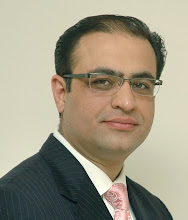
Kapil Chopra is President of Oberoi Hotels and Resorts.He writes a blog on collecting Indian Contemporary Art at www.indianartinvest.blogspot.com.He is also a mentor to India's leading art magazine, The Wall at www.thewallartmag.com and also Charitybeds.com which helps EWS patients get hospital beds in private hospitals free of cost.In addition to this he also the Founder of India's largest selling art gallery, Bestcollegeart.com.

Friday, July 30, 2010

Hype and Reality !

Dear Friends,

My latest article in "The Telegraph" Newspaper reaching over a million readers for your reading pleasure, comments are welcome !


If you have picked up any newspaper in the past month, no doubt you’ve read stories announcing new record values for works of some Indian masters. But as they say, the devil lies in the detail and that is where a sensational headline can give people the wrong idea about the art market being on a new roll.

Let me make this easy for you so that you get a clear understanding of what’s going on in the art market. Take a look at the summer auctions at the major auction houses.

Starting with the modern art market, yes prices and volumes for some of the works by key artists — Hussain, Raza, Gaitonde, Souza and Tyeb Mehta — are back up at the peak levels witnessed in June 2008. This marks a significant recovery if you recollect that volumes in the modern art market had tumbled 63 per cent and prices fell 46 per cent between September 2008 and March 2009.

The key highlight in the summer sales was the auction of 152 works from the Souza estate through Christie’s which went at double their high price estimate. There were some very good works and it was an opportunity for people who had missed acquiring Souza works to buy them.

But is the excitement triggered by news reports of the record price of Rs 16 crore fetched by Raza’s Saurashtra justified? Well yes and no. Yes, because it was an exceptional work and no because what has sold in the auctions at higher prices are works which have been exceptional in terms of high quality, rarity and provenance, so it deserved the price but not the hype.

Artist S.H. Raza
Works which do not meet these criteria are still not selling or selling at much discounted valuations.

So be careful in this new market. I have started getting a lot of calls from my friends who say they would now like to acquire a work by one of the modern masters as the prices are expected to go even higher and their budget range of Rs 20 lakh to Rs 30 lakh will get them nothing that is even close to outstanding.

Jumping into the market now — unless you are very certain about the quality of what you are buying will only make the make a gallery richer and the collector or buyer poorer — saddled with a work that is tough to sell. I already know of someone who has bought a very ordinary Raza work at a valuation which should have been 50 per cent below what he has paid. Remember the “golden rule of significance” whenever you collect art — namely buy significant and defining works.

Now to the Contemporary Art market or younger artists as we know them. They had a 93 per cent correction in volume, as per Art Tactic, an independent art research firm, which means auction houses had very few people consigning Contemporary Art and the prices slid a massive 85 per cent between September 2008 and March 2009. Well, they are still down by 35 per cent from their peak. Volumes are better but not even close to what you saw in the boom times.

But you may have noticed that Bharti Kher set a new record of close to Rs 7 crore for her work "The Skin speaks a Language not its own" at Sotheby’s evening sale. The work was sold in 2007 at Art Basel and is her most defining work till date. The work according to international sources was sold again in 2008 at the peak of the art market at close to this current valuation. This means that the person who consigned this work having bought it when prices were at their peak in 2008 really has not gained much. Lesson: it never does pay to buy into the hype.

Bharti Kher’s work titled The Skin speaks a Language not its own

Interestingly Subodh Gupta has slowly been creeping up the charts again. I always get surprised when his paintings sell well because, according to me, Subodh is one of the most brilliant installation artists of our times, but when his paintings sell at higher prices it’s always a sign that people are again not buying significant works from his stable.

An untitled work by Subodh Gupta

His famous installation The Hungry God is a case in point and when it comes on the auction market it will set a new record for contemporary art in India. Again, though as some collectors get smarter, Bharti’s significant work sold at Sotheby’s and Subodh’s work — which was estimated to fetch Rs 2.5 crore to Rs 3.5 crore — did not sell.

The lessons from the summer auction are very clear, whether it is in the modern space or the Contemporary space, buy exceptional works, buy works that are significant of their times and have a good provenance. Do not be carried away and end up collecting or investing in high value art without research.

Also remember to analyse price patterns if you’re investing rather than collecting. One of the reasons for new records being established is also the fact that private museums being set up in India are buying. This is further adding fuel to the fire and prices for exceptional works from the modern masters are touching lifetime highs. Also I fear that market speculative forces are again back at work and it pays to be cautious. There is definitely some level of insider trading again visible in the auctions.

And of course, the final message to collectors, the most important golden rule —buy only what you love!


Kapil Chopra is Senior Vice President of Oberoi Hotels & Resorts.He writes a blog on collecting and investing in Indian Contemporary Art at www.indianartinvest.blogspot.com.He also writes for The Telegraph Newspaper in the Sunday magazine " Graphiti" every fortnight. In Delhi, he writes for "The Mail Today " Newspaper and the "First City" Magazine.

Sunday, September 20, 2009

A Broader Canvas - India Art Summit - Reflections

Dear Friends,

Here is the latest article published in "Telegraph" newspaper for your reading pleasure!

The India Art Summit 2009 is over but memories of the event that drew some 40,000 visitors will linger for a long time to come. For a start, it must be said that this has been the first really successful art fair in India. There were over 55 galleries taking part including 18 international ones, which is a record. On show were works by the legendary Pablo Picasso and our own Mumbai-born Anish Kapoor, the sculptor well known for his large public works.

Top class international galleries like London’s Lisson and Arario from Beijing were also in attendance at the summit, which was spread over three sprawling halls at Delhi’s Pragati Maidan.

Visitors at the India Art Summit 2009

The art on display was in some cases exceptional, especially the Moderns. Both Delhi Art Gallery & Dhoomimal gallery exhibited very good collections of S.H. Raza and F.N. Souza. They had good quality works from all the important time periods on display.

By contrast, the Contemporary part of the Summit was a bit lacklustre. The major galleries in the Contemporary space did not put on show their ‘A’ list of artists. Instead they featured a lot of emerging artists and in some cases trotted out for the summit their second and third lists of artists who had not sold in recent shows.

Subodh Gupta’s Alibaba (2009, oil on canvas, 6.5ft x 12ft) at Trident,Gurgaon show

Nevertheless, the art summit was a laudable initiative even if some of the galleries insisted on thinking short-term, trying to flog art which was not the best they had to offer. This attitude will need to change in the future if the India Art Summit is to move up from here and be considered a truly serious international-level art fair.

Still I was impressed with the roster of opening and collateral events from Anant Art Gallery, Talwar Art Gallery, Gallery Seven Art and also a fantastic opening show at the Devi Foundation in Gurgaon. These events kept the fair busy and exciting.

Interestingly though, I was even more impressed with the international galleries. Arario, the powerful Beijing gallery, actually showed a big installation by L. N. Tallur, the promising Korea-based Indian artist and a large Jitish Kallat canvas. I also took to the fact that international galleries had really a very eclectic range of art to show. They seemed to be quite serious about their display and were looking at the lucrative potential of acquiring a new Indian collector base.

Turning to the speaker forum, the organisers had put together a very good mix of top artists, galleries, curators and collectors. Frank opinions were aired and there were some heated debates on the commercial aspects of art. Amrita Jhaveri, who runs an art advisory spoke about all the stakeholders in the circle of collecting art and the conflicts of interest that they sometimes have. Nitin Bhayana, one of India’s top collectors, shared his insights on how to build a great collection.


Bharti Kher’s The left-over DNA of a little mouse that the cat ate (2009, bindis on painted board, 72in x 96in) at Trident, Gurgaon show

Peter Nagy of Gallery Nature Morte was clear on his views from a gallery perspective and stressed he always was particular about the collector who was buying the work in order to promote genuine collectors and discourage speculators. Finally Anders Petterson from ArtTactic, the research think-tank, said stated categorically that, in his view, we are close to the bottom in both the Modern and Contemporary art space price-wise, according to his surveys in the Western world and even in the Indian space. He feels, however, that real recovery is still 12 months away for the Contemporary art space.

From the quality of Contemporary art presented, Nagy from Nature Morte saved the best for the last, with his show, Realisation of all Possibilities, at the Trident Gurgaon, which hosted the VIP Closing party (I must state an interest here as I was the show’s host).

The roster of artists were the best in the Indian Contemporary art space and the scale of the works was exceptional and not seen often with a 12ft x 6.5ft canvas by Subodh Gupta, a 8ft x 6ft canvas by Bharti Kher and a 6ft x 5ft work by Bharat Sikka.

Also there was a 12ft x 8ft canvas by Bari Kumar and a towering 14ft Transformer sculpture by Thukral & Tagra, and a 10ft x 5ft work by New York-based Seher Shah, which was also shown at The Armory Art Fair in New York. The scale and size of works from such important Contemporary artists in one show has not been seen in at least a year.

In the wake of the huge crowds that turned up for the summit, many commentators suggested that it showed the art market was on the road to recovery. I wouldn’t put big bets on that yet, but good quality art will always have buyers. So until you get that exceptional piece of art, hold your purse and don’t get carried away!

Kapil Chopra is Senior Vice President of Oberoi Hotels & Resorts.He writes a blog on collecting and investing in Indian Contemporary art at www.indianartinvest.blogspot.com.He also writes for The Telegraph newspaper in the sunday magazine " Graphiti" every fortnight. In Delhi, he has written for "The Mail Today " newspaper and "First City" magazine.